Retaining Walls & Concrete Masonry
Structural retaining walls and concrete masonry that controls slopes and adds functional beauty to your property.
Managing Slopes and Elevation Changes
Retaining walls do the important work of holding back soil on sloped properties. They turn unusable hillsides into level, functional spaces. A well-built retaining wall prevents erosion, controls drainage, and can add usable square footage to your yard. In Bell Gardens, where properties often have grade changes from the street to the house or across the backyard, retaining walls solve practical problems while improving your property's appearance.
These structures carry serious loads and need to be engineered correctly. The wall isn't just holding back dirt. It's resisting thousands of pounds of pressure from soil, water, and everything planted in that soil. A poorly built retaining wall can lean, crack, or even collapse, causing property damage and safety hazards. That's why we approach every retaining wall project with careful planning and proper construction techniques.
We build retaining walls from various materials, but concrete and concrete masonry units give you the strongest, longest-lasting results. Poured concrete walls handle the highest loads and work for any height. Concrete block walls offer a more affordable option for shorter walls while still providing excellent strength. Both types can be finished in ways that complement your home's style and blend with your landscaping.
Types of Retaining Walls We Build
The right retaining wall depends on how much soil you're holding back, your property's specific conditions, and your budget. Here are the main options we install.
Poured Concrete Retaining Walls
For maximum strength and durability, poured concrete walls can't be beat. We start with a concrete footing below grade that anchors the wall. Then we build forms and pour the wall with heavy steel reinforcement running vertically and horizontally throughout. The resulting monolithic structure handles tremendous loads and lasts for decades. Poured walls work for any height from 2 feet to 10 feet or more. They're especially good when you need to retain a lot of soil or when the wall will also serve as a foundation wall for a structure.
We can finish poured concrete walls in several ways. A smooth finish and paint create a clean modern look. Stone or brick veneer applied to the face gives you the appearance of natural materials with concrete's strength underneath. Integral color or staining provides a finished look without ongoing maintenance. The back of the wall gets a waterproofing treatment to protect against moisture damage.
Concrete Block Retaining Walls
Concrete masonry units, commonly called concrete blocks or CMUs, give you a strong wall at a lower cost than poured concrete. These walls use interlocking blocks stacked in courses on a concrete footing. Steel rebar runs through the hollow cores of the blocks, and we fill the cores with concrete to tie everything together. The result is nearly as strong as a poured wall but typically costs less because block work requires less forming and faster installation.
Standard gray blocks can be covered with stucco, stone veneer, or other finishes. Decorative concrete blocks come in various colors and textures that look good without additional finish. Split-face blocks have a textured front that resembles natural stone. We can also cap the top of the wall with different materials like brick, stone, or concrete caps to complete the look.
Segmental Block Walls
For shorter walls up to about 4 feet, interlocking segmental retaining wall blocks offer a good balance of strength, appearance, and cost. These specialized blocks are designed specifically for retaining walls. They stack without mortar and use built-in setback to create a stable, gravity-based wall. Many styles are available, from smooth contemporary blocks to textured units that look like natural stone. Installation goes quickly, and the finished wall has an attractive face without additional finish work.
Concrete Masonry Features
Beyond retaining walls, we handle all types of concrete masonry work. Block walls for property boundaries, privacy screens, and equipment enclosures. Concrete block structures for storage sheds, trash enclosures, and utility buildings. Planter walls that create raised beds for landscaping. Seat walls around patios that provide both seating and architectural interest. We also repair and rebuild existing masonry walls that have deteriorated or been damaged.
Critical Elements of Retaining Wall Construction
Building retaining walls right requires attention to details that aren't visible once the wall is finished. Here's what goes into every wall we build to ensure it performs properly for decades.
- •Proper footing: Every retaining wall needs a concrete footing below the frost line. The footing spreads the wall's weight and prevents settling. We make footings wider and deeper as walls get taller or loads increase.
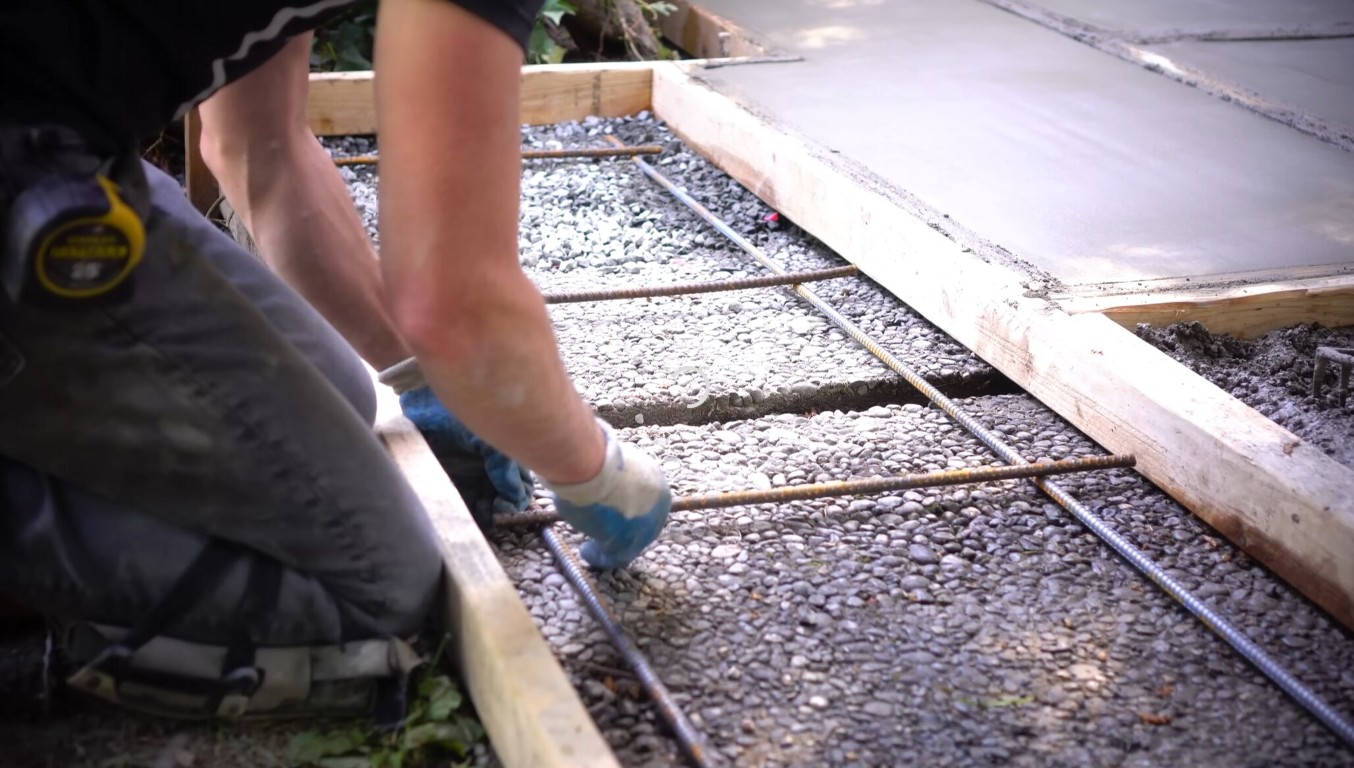
- •Steel reinforcement: Rebar placed vertically and horizontally throughout the wall gives it the strength to resist soil pressure. The reinforcement must be positioned correctly and tied together properly. Taller walls need more and thicker rebar.
- •Drainage system: Water buildup behind a retaining wall creates enormous pressure that can cause failure. We install gravel backfill and perforated drain pipes at the base of the wall to collect water and carry it away. Weep holes allow water to escape through the wall face.
- •Proper backfill: The soil behind the wall matters. We use free-draining gravel immediately behind the wall, then transition to regular soil further back. This layered approach improves drainage and reduces pressure on the wall.
- •Engineering when required: Walls over a certain height or walls supporting structures need engineered plans stamped by a licensed engineer. We work with engineers to get proper calculations and ensure the wall meets code requirements.
- •Building permits: Most retaining walls require permits and inspections. We handle the permit process and coordinate inspections so your wall is built to code and properly documented.
If you're planning multiple improvements to your property, we can coordinate retaining wall construction with other concrete work in Bell Gardens to create a cohesive design that ties everything together.