Concrete Slab & Foundation Work
Solid foundation construction and concrete slab installation for residential and commercial properties.
The Foundation of Every Building
Your foundation is the most important part of any structure. It carries the entire weight of the building and transfers that load safely to the ground. A poorly built foundation leads to cracked walls, stuck doors, and expensive repairs down the road. In Bell Gardens, where soil conditions vary from lot to lot, proper foundation work requires local knowledge and experience.
We've poured foundations for homes, garages, sheds, room additions, and commercial buildings throughout the area. Whether you're building new construction or adding onto your existing property, we handle every aspect of foundation and slab work. From site evaluation and soil testing to final finishing, our process ensures your structure sits on solid ground that won't shift or settle.
Most residential construction in Southern California uses concrete slab foundations. These monolithic slabs combine the foundation and floor into one continuous pour. They're cost-effective, strong, and perfect for our climate since we don't need deep frost footings like builders in colder regions. We also build raised foundations with stem walls when the site requires it, and we repair existing foundations that have developed problems.
Types of Foundation Work We Do
Different projects call for different foundation approaches. Here's how we match the foundation type to your needs and site conditions.
Slab-on-Grade Foundations
This is the most common foundation type for homes and additions in Bell Gardens. We pour a single thick slab directly on prepared ground. The edges are thicker than the center to support load-bearing walls. We embed steel reinforcement throughout the slab and add extra reinforcing bars where walls will sit. The slab serves as both foundation and floor, which saves time and money compared to other methods.
Slab-on-grade works well in areas with stable soil and no flooding concerns. We take special care with the base preparation, compacting the soil and adding layers of gravel for drainage. Any plumbing that runs under the slab gets installed before we pour. This includes supply lines, drain pipes, and sometimes electrical conduit. Getting these right the first time matters because you can't easily access them later.
Post-Tensioned Slabs
In areas with expansive clay soil that swells and shrinks with moisture changes, we often recommend post-tensioned slabs. These use high-strength steel cables that run through the concrete. After the concrete sets, we tension these cables to put the entire slab under compression. This makes the foundation incredibly strong and resistant to cracking from ground movement. Post-tensioned slabs can span longer distances with less concrete thickness, and they handle problem soils better than standard slabs.
Raised Foundations and Stem Walls
When building on a slope or in areas prone to water issues, a raised foundation makes more sense. We pour concrete footings below grade, then build stem walls up to the desired height. The floor structure goes on top of these walls, creating a crawl space underneath. This approach costs more than a slab but gives you access to plumbing and provides better drainage on difficult sites. We've built raised foundations for hillside homes and properties where grading a level pad for a slab would require too much excavation.
Commercial and Industrial Slabs
Warehouse floors, shop buildings, and commercial spaces need heavier-duty slabs than homes. We pour thicker concrete, typically 6 to 8 inches, with more reinforcement. These slabs often require special finishes like power troweling for a smooth, durable surface. For buildings with heavy equipment or rack storage, we design the slab to handle concentrated loads. We also handle specialized requirements like floor drains, control joint layouts, and isolation joints around columns.
Our Foundation Installation Process
Building a foundation right takes systematic work and attention to engineering requirements. Here's what goes into every foundation we build.
- •Site evaluation: We assess your soil type, drainage patterns, and site conditions. Problem soils or high water tables require special handling. We work with engineers when the project calls for calculations or stamped plans.
- •Excavation and grading: We dig to the proper depth and grade the area perfectly level. This step determines how much concrete you'll need and affects drainage. Poor grading causes water problems and uneven foundations.
- •Base preparation: We compact the native soil and add a gravel base for drainage and stability. A moisture barrier goes down to prevent ground moisture from wicking up into the concrete.
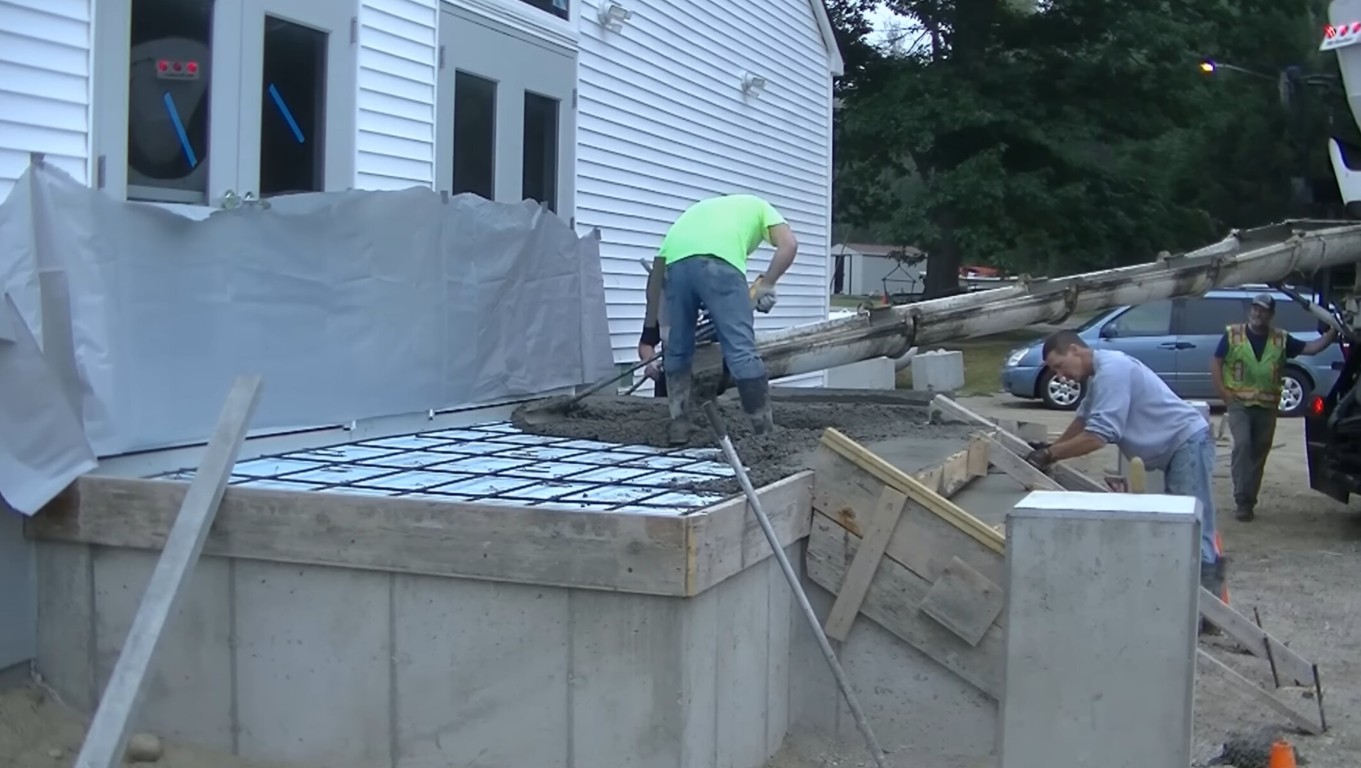
- •Forming and reinforcement: We set forms to the exact dimensions shown on the plans. Steel rebar gets positioned according to engineering specs. All plumbing and electrical rough-in must be complete and inspected before we pour.
- •Concrete placement: We order the correct mix design for foundation work and pour continuously to avoid cold joints. As we pour, we vibrate the concrete to eliminate air pockets and ensure it flows around all the reinforcement.
- •Finishing and curing: We level the top surface and let the concrete cure properly. Foundation concrete needs at least 7 days to develop sufficient strength before you can build on it.
If you're also planning exterior work around your new structure, we can coordinate with driveway installation or patio construction to create a complete concrete package for your property.