Concrete Pool Decks
Beautiful, slip-resistant pool deck surfaces that stay cool and stand up to water and sun exposure.
Creating the Perfect Pool Surround
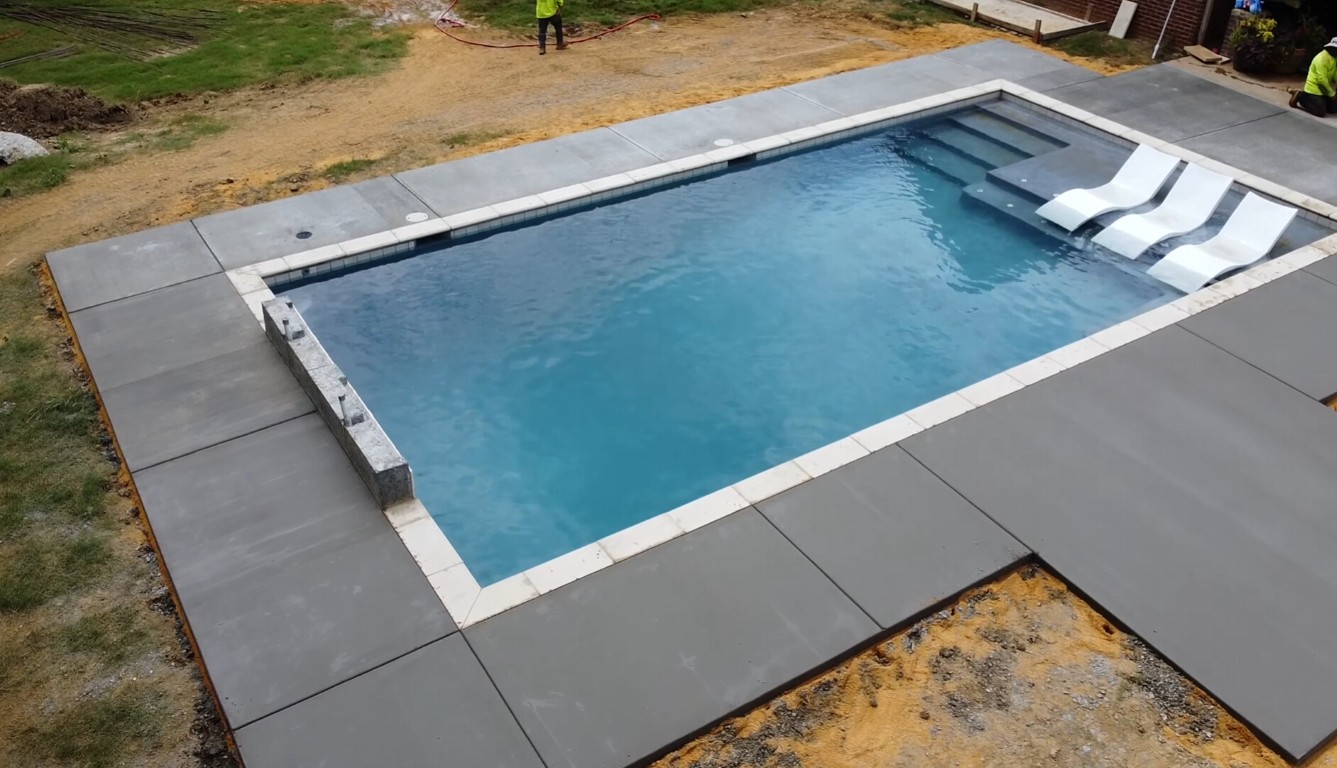
Your pool deck serves as much more than just a border around the water. It's where you sunbathe, where kids play, and where you entertain guests during summer gatherings. The deck needs to handle bare feet, pool chemicals, constant moisture, and intense sun exposure. It must provide safe traction when wet while staying comfortable to walk on. In Bell Gardens, where pools are popular backyard features, choosing the right pool deck material and design makes all the difference in how you enjoy your outdoor space.
Concrete makes an ideal pool deck material for several reasons. It stays cooler underfoot than pavers or stone, which matters when you're walking barefoot on hot summer days. It creates a seamless surface without gaps where water can collect or where small toys get lost. Properly installed concrete won't shift or settle like individual pavers can. The surface can be textured to prevent slipping without being so rough that it scrapes knees and feet. And concrete offers more design flexibility than you might think.
We've built pool decks in every style from simple functional surfaces to elaborate outdoor living spaces. Some homeowners want basic concrete that does the job reliably. Others choose decorative finishes that look like stone or tile. Many extend their pool deck to include a larger patio area with seating and dining spaces. Whatever your vision, concrete delivers the durability and performance your pool deck needs.
Pool Deck Design Considerations
Building a pool deck involves more than just pouring concrete around the pool. Several factors affect safety, comfort, and longevity.
Size and Layout
Most building codes require at least 4 feet of deck space around a pool, but you'll want more room for comfortable use. A minimum of 6 to 8 feet gives you space to walk around safely and set up a few lounge chairs. If you entertain frequently or have a larger pool, 10 to 12 feet or more creates proper pool party space. The deck doesn't need to be the same width all around. You might want a wider area on one side for furniture and narrower walkways on other sides.
Think about traffic flow and how people will use the space. You need clear paths from the house to the pool and from the pool to any outdoor shower or bathroom. Leave room for gates and fence openings if required. Consider where you'll place furniture, umbrellas, and any permanent features like fire pits or outdoor kitchens.
Drainage and Slope
Pool decks get soaked constantly from splashing, dripping, and rain. The concrete must slope away from the pool and away from your house to drain properly. We typically create a gentle slope of about a quarter inch per foot. This grade is barely noticeable when walking but moves water effectively. Some local codes require deck drains around the pool to collect runoff. The drainage system needs to direct water to appropriate areas without creating puddles or erosion problems.
Surface Texture and Temperature
The surface texture is critical for safety. Pool decks must provide traction when wet to prevent slips and falls. However, texture that's too aggressive feels uncomfortable on bare feet and can scrape skin. We use finishes that strike the right balance. Broom finishing creates light texture that works well. Brushed surfaces provide traction without being abrasive. Exposed aggregate shows decorative stones and has natural slip resistance.
Concrete color affects how hot the deck gets in direct sun. Lighter colors reflect more heat and stay cooler. Dark gray or charcoal concrete looks sleek but can become uncomfortably hot to walk on during summer afternoons. We can add cooling additives to the concrete mix or use coatings designed to reduce surface temperature. Many homeowners choose light tan, beige, or off-white tones that look good and stay comfortable.
Decorative Options
Plain concrete works fine, but decorative treatments create a resort-like atmosphere. Stamped concrete patterns can mimic flagstone, slate, or travertine for an upscale look at a fraction of the cost. Acid staining produces natural color variations in earth tones. Concrete can be scored in patterns to break up large expanses of surface. Borders in contrasting colors or textures define the pool edge and add visual interest. We can also create different zones with varied finishes, like a smooth band around the pool edge transitioning to textured areas further out.
Building Pool Decks That Last
Pool decks face harsh conditions year-round. Here's how we build them to handle the stress and stay beautiful.
- •Proper thickness and reinforcement: Pool decks need at least 4 inches of concrete thickness, and we typically pour 5 to 6 inches for added durability. Steel reinforcement throughout the slab prevents cracking. We pay special attention to the area right around the pool edge where stresses concentrate.
- •Isolation joints: The pool deck must be separated from the pool structure itself with an expansion joint. This allows the deck and pool to move independently without cracking. We also isolate the deck from your house foundation and any other fixed structures.
- •Quality concrete mix: We use concrete with air entrainment to resist damage from pool chemicals and weather. The mix includes proper water-cement ratios to prevent surface deterioration. Adding fibers to the mix provides extra crack resistance.
- •Careful curing: Pool decks must cure properly before exposure to pool water and chemicals. We protect the fresh concrete and allow adequate curing time. Rushing this process leads to weak surfaces that deteriorate quickly.
- •Sealing for protection: We apply a quality sealer after the concrete cures completely. The sealer protects against chlorine and other pool chemicals, prevents staining, and makes the surface easier to clean. Resealing every few years maintains this protection.
- •Coordination with pool installation: If you're building a new pool, we coordinate closely with the pool contractor to ensure everything fits together correctly. For existing pools, we work carefully around the pool structure and equipment.
Many homeowners combine pool deck work with other outdoor improvements. We can connect your pool deck to existing patios or create a unified outdoor living space that flows naturally from your house to the pool area.